
Curcumin Benefits and Side Effects: What Research Supports
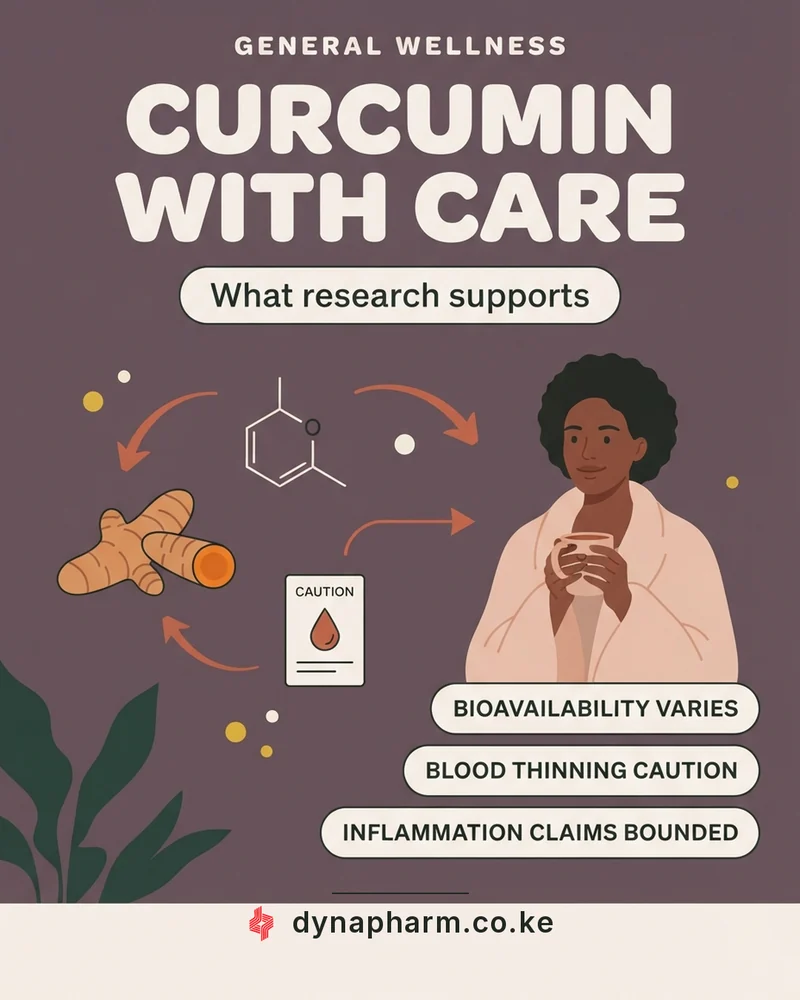
Curcumin is the best-known compound in turmeric. It has real biological activity in the lab, but human results are mixed.
Curcumin benefits and side effects
Evidence snapshot
Curcumin is poorly absorbed on its own. Formulations with piperine or lipid carriers raise blood levels but can also raise interaction risk.
Trials for joint discomfort show modest effects in some studies, with considerable variation in dose and duration.
Curcumin can cause stomach upset and may interact with anticoagulants, diabetes medicines and some chemotherapy drugs.
What to do with this
Choose a product that states the curcuminoid content and formulation. Take it with food, and stop before surgery if you use it regularly.
For the specific question "curcumin benefits and side effects", that means wellness products are sold on possibilities, but a biological mechanism in a test tube is not a health outcome in a person. Ask what was measured, in whom, for how long and with which product before acting on a claim.
Write down the reason you started a product and what would count as a useful change. If nothing measurable changes after a fair trial, there is little reason to keep paying for it.
Questions people ask
Is turmeric the same as curcumin?
Turmeric is the spice; curcumin is one of its active compounds, present in a much smaller fraction.
Can it replace anti-inflammatory medicine?
No. Do not stop prescribed treatment without medical advice.
A common follow-up
Can it replace anti-inflammatory medicine? No. Do not stop prescribed treatment without medical advice. That context matters when you see broad claims about curcumin benefits and side effects.
The short answer
Choose a product that states the curcuminoid content and formulation. Nothing here replaces medical care, and persistent symptoms deserve a proper assessment rather than another product.
Sources
Found this helpful? Share it or order on WhatsApp: