
Vitamin D Supplements for Women: Choosing and Using Them
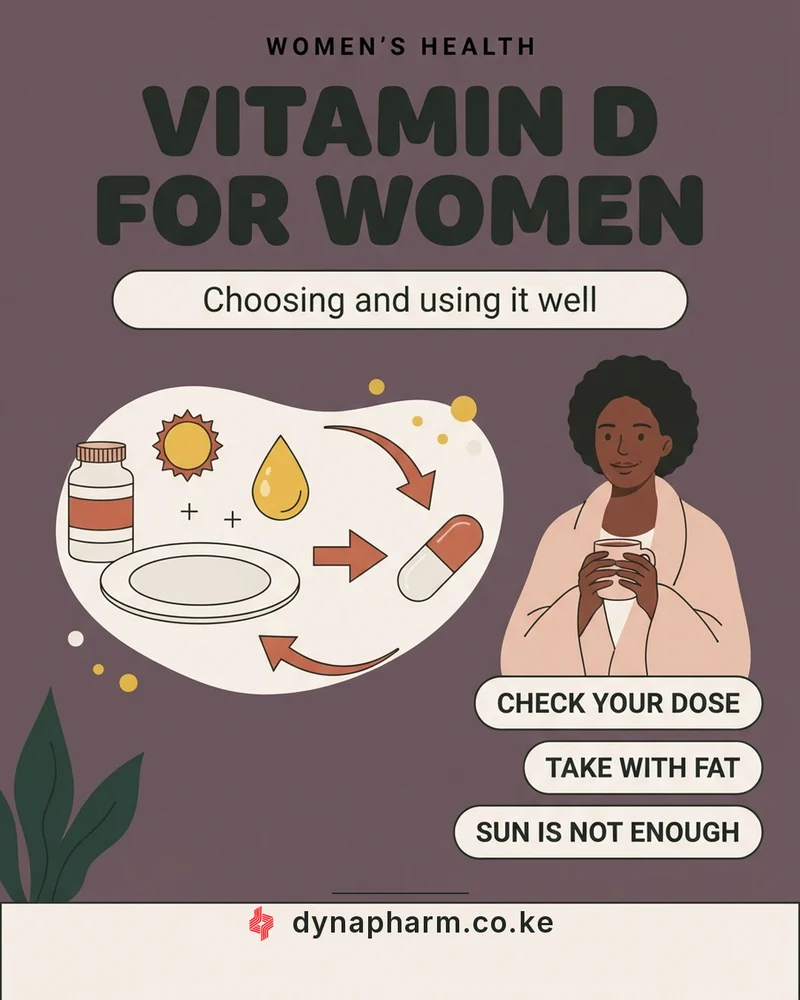
Vitamin D needs vary with sun exposure, skin tone, age and diet. A supplement can help, but more is not automatically better.
Vitamin d supplements for women
Evidence snapshot
Vitamin D supports calcium absorption and bone health, and low levels are common in many populations.
Blood testing is the only way to know your status. Dose decisions should consider your result and medical history.
Vitamin D is fat-soluble, so it is best taken with a meal containing fat. Excessive doses can raise blood calcium.
What to do with this
Choose a product that states the amount in micrograms or IU per serving. If you are pregnant, have kidney disease or take calcium supplements, ask before using high doses.
For the specific question "vitamin d supplements for women", that means a useful way to judge any nutrition product is to compare its serving with ordinary food. A capsule or a sachet rarely delivers the same amount of a nutrient as a proper meal, and concentrated extracts can behave differently from the whole plant.
Start with the smallest reasonable serving and keep it consistent for a few weeks. If you are tracking a blood result such as iron, vitamin D or B12, repeat the test only when a clinician advises it, because results can fluctuate for unrelated reasons.
Questions people ask
Can vitamin D help fatigue?
Only if you are deficient. Otherwise evidence for fatigue is weak.
Should I take it with calcium?
Often, but the right amounts depend on your diet and blood results.
A common follow-up
Should I take it with calcium? Often, but the right amounts depend on your diet and blood results. That context matters when you see broad claims about vitamin d supplements for women.
The short answer
Choose a product that states the amount in micrograms or IU per serving. Nothing here replaces medical care, and persistent symptoms deserve a proper assessment rather than another product.
Sources
Found this helpful? Share it or order on WhatsApp:
