
Noni Powder vs Juice: Differences in Nutrients, Taste and Use
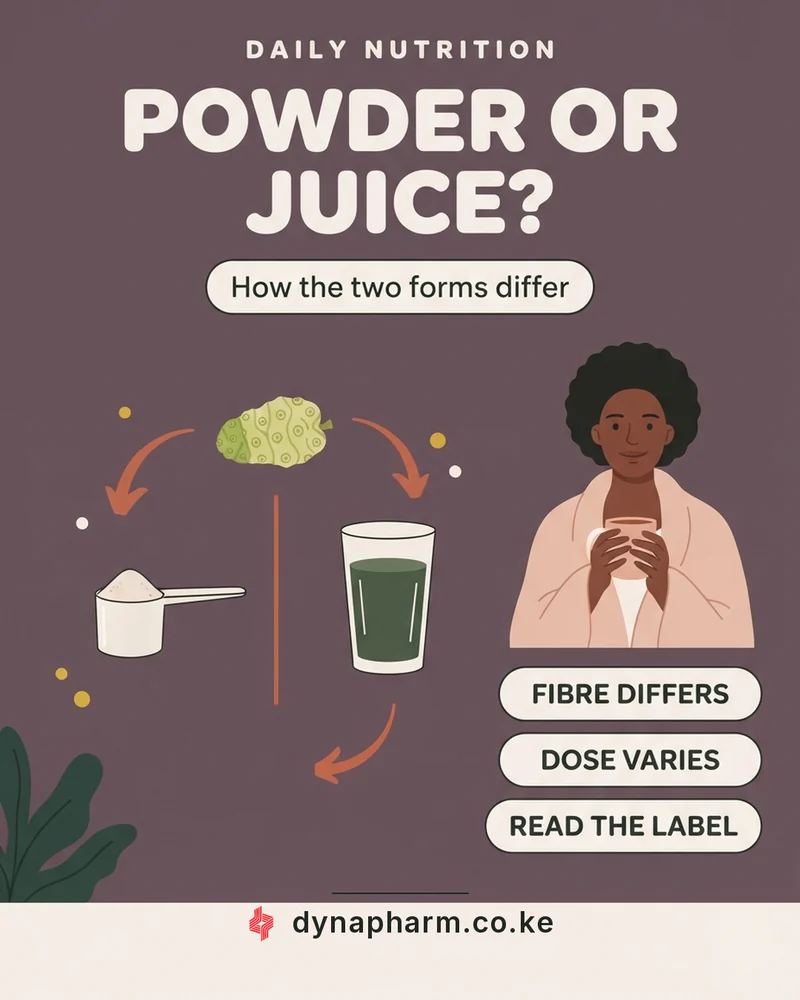
Powder and juice are two ways of taking the same fruit, but they are not interchangeable gram for gram.
What is difference noni powder and juice
Evidence snapshot
Juice is closer to the traditional fermented product and contains water, potassium and iridoids in a liquid serving.
Powder is usually spray- or freeze-dried juice or fruit, often on a carrier such as maltodextrin. The carrier changes the nutrient density.
Heat and long storage reduce some phenolic compounds in both forms, though iridoids are relatively stable.
What to do with this
Compare the equivalent fruit amount per serving rather than the scoop or millilitre. Check for added sugar and choose a product that states the plant part and origin.
For the specific question "what is difference noni powder and juice", that means absorption is as important as intake. Fat-soluble vitamins need dietary fat, minerals compete with one another, and compounds such as phytates or polyphenols can reduce how much you actually take in. Labels rarely tell you this, so timing and meal context matter.
Start with the smallest reasonable serving and keep it consistent for a few weeks. If you are tracking a blood result such as iron, vitamin D or B12, repeat the test only when a clinician advises it, because results can fluctuate for unrelated reasons.
Questions people ask
Which is easier to dose?
Powder is easier to travel with; juice gives a measured liquid serving.
Does powder have more fibre?
Usually little, because most powders are made from strained juice rather than whole fruit.
A common follow-up
Does powder have more fibre? Usually little, because most powders are made from strained juice rather than whole fruit. That context matters when you see broad claims about what is difference noni powder and juice.
The short answer
Compare the equivalent fruit amount per serving rather than the scoop or millilitre. Nothing here replaces medical care, and persistent symptoms deserve a proper assessment rather than another product.
Sources
Found this helpful? Share it or order on WhatsApp:
