
What Is a Nutraceutical? Definition, Examples and Limits
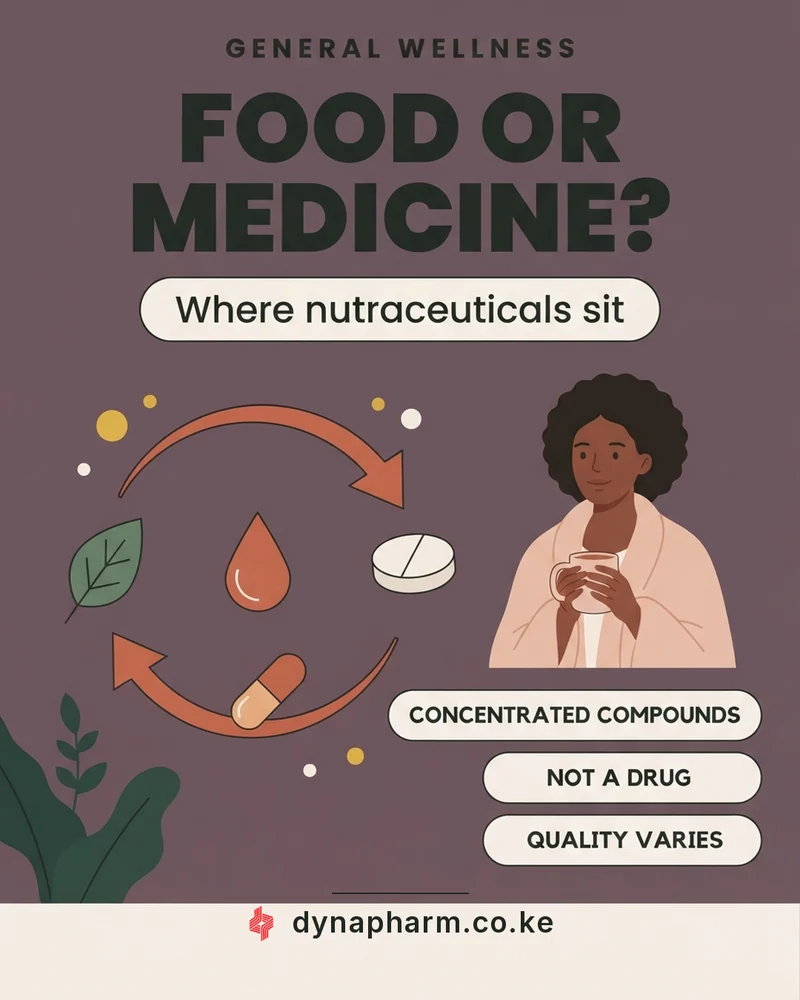
Nutraceutical is a broad marketing and regulatory word. It covers anything from a vitamin tablet to a fortified drink, but it is not a quality mark.
Difference between nutraceuticals and pharmaceuticals
Evidence snapshot
The term combines 'nutrition' and 'pharmaceutical' and has no single universal legal definition.
Common examples include vitamins, minerals, probiotics, plant extracts and foods fortified with added nutrients.
Being called a nutraceutical says nothing about whether a product works for your condition or interacts with your medicines.
What to do with this
Ignore the category label and read the ingredient panel. Check dose, serving size, expiry and whether a third party has tested the batch.
For the specific question "difference between nutraceuticals and pharmaceuticals", that means wellness products are sold on possibilities, but a biological mechanism in a test tube is not a health outcome in a person. Ask what was measured, in whom, for how long and with which product before acting on a claim.
Write down the reason you started a product and what would count as a useful change. If nothing measurable changes after a fair trial, there is little reason to keep paying for it.
Questions people ask
Is a probiotic a nutraceutical?
Often, yes, depending on how it is sold and labelled.
Does 'natural' make it safer?
No. Natural substances can still cause side effects and interactions.
A common follow-up
Does 'natural' make it safer? No. Natural substances can still cause side effects and interactions. That context matters when you see broad claims about difference between nutraceuticals and pharmaceuticals.
The short answer
Ignore the category label and read the ingredient panel. Nothing here replaces medical care, and persistent symptoms deserve a proper assessment rather than another product.
Sources
Found this helpful? Share it or order on WhatsApp:
