
Foods Rich in Calcium in Kenya: Local Options That Work
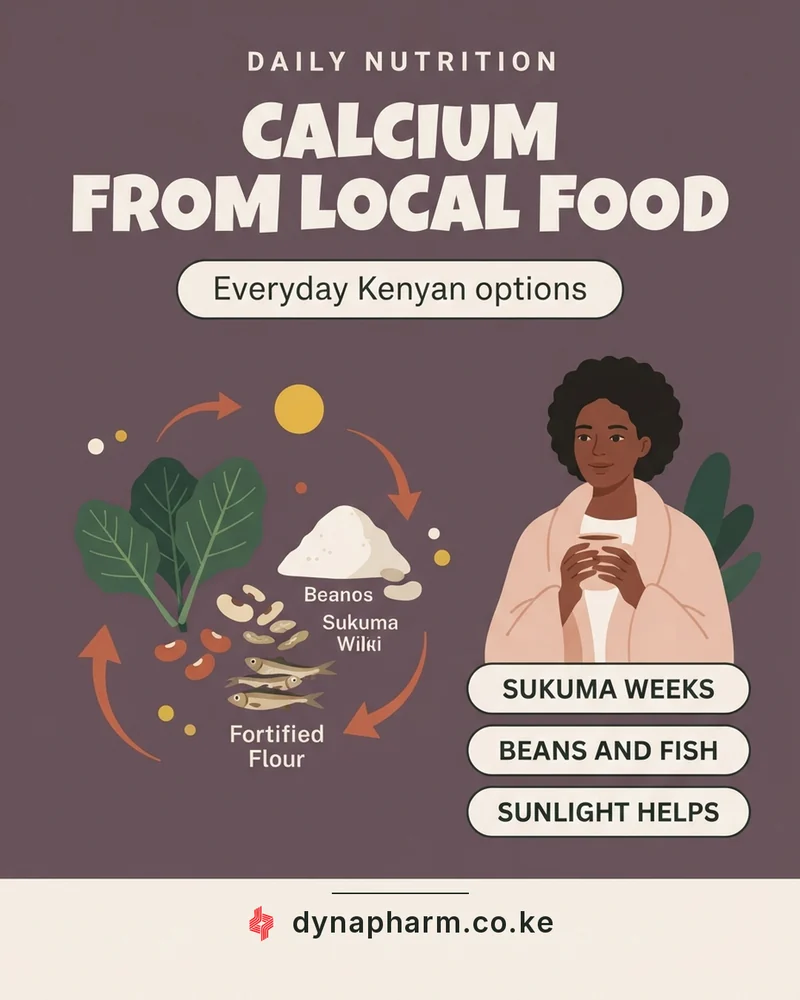
You do not need imported supplements to improve calcium intake. Several ordinary Kenyan foods contribute meaningful amounts.
Foods rich in calcium in kenya
Evidence snapshot
Sukuma wiki and other dark leafy greens contain calcium, but some also contain oxalates that reduce absorption.
Milk, yoghurt and traditional fermented milk provide calcium in a form that is readily absorbed by most people.
Small dried fish eaten with bones, where locally available, are a dense source of calcium and also provide protein.
What to do with this
Aim for variety across the day rather than relying on one food. Pair calcium sources with vitamin D from sunlight or food, since absorption depends on adequate vitamin D.
For the specific question "foods rich in calcium in kenya", that means absorption is as important as intake. Fat-soluble vitamins need dietary fat, minerals compete with one another, and compounds such as phytates or polyphenols can reduce how much you actually take in. Labels rarely tell you this, so timing and meal context matter.
Start with the smallest reasonable serving and keep it consistent for a few weeks. If you are tracking a blood result such as iron, vitamin D or B12, repeat the test only when a clinician advises it, because results can fluctuate for unrelated reasons.
Questions people ask
Does spinach count?
It contains calcium but also high oxalate, so absorption is limited. Include other sources too.
Do I need a supplement?
Only if your diet and clinician suggest a gap. Food first is usually enough.
A common follow-up
Do I need a supplement? Only if your diet and clinician suggest a gap. Food first is usually enough. That context matters when you see broad claims about foods rich in calcium in kenya.
The short answer
Aim for variety across the day rather than relying on one food. Nothing here replaces medical care, and persistent symptoms deserve a proper assessment rather than another product.
Sources
Found this helpful? Share it or order on WhatsApp: