
D.I. Sea Cucumber Jelly: Benefits, Ingredients and What to Expect
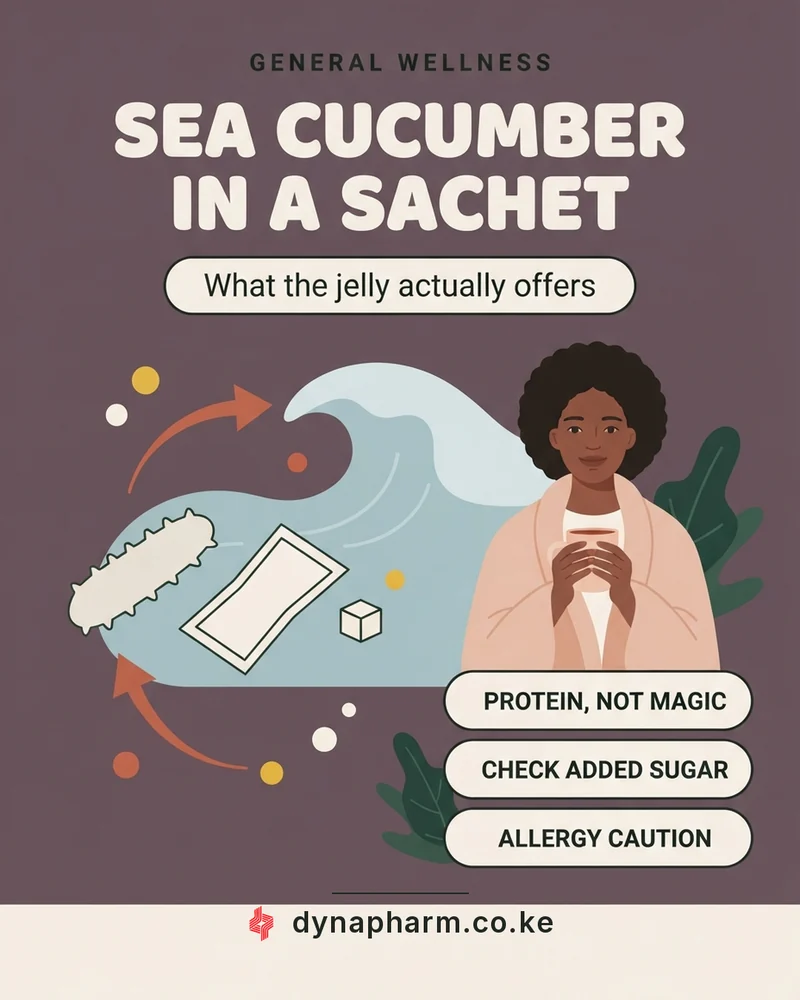
Sea cucumber jelly is sold as a convenient way to take a marine traditional ingredient. The science is thinner than the marketing.
Di sea cucumber jelly benefits
Evidence snapshot
Sea cucumber contains collagen, polysaccharides and minerals. Much of the research is in cell and animal models rather than people.
Collagen from food is digested into amino acids and small peptides. It is not delivered intact to skin or joints.
Jelly products often contain sugar, flavourings and gelling agents, so the nutritional profile differs from dried sea cucumber.
What to do with this
Check the serving size and added sugar. If you have a seafood allergy, avoid it, and ask a clinician if you are pregnant or taking anticoagulants.
For the specific question "di sea cucumber jelly benefits", that means regulation differs sharply between medicines and supplements. A product can be legal to sell without having been shown to treat the condition it is implied to help, which is why the wording on the label deserves attention.
Write down the reason you started a product and what would count as a useful change. If nothing measurable changes after a fair trial, there is little reason to keep paying for it.
Questions people ask
Does sea cucumber jelly help skin?
There is no good clinical evidence that it improves skin in humans. Overall diet and sun protection matter more.
Is it high in protein?
Usually not. Check the label; most of the jelly is water and sweetener.
A common follow-up
Is it high in protein? Usually not. Check the label; most of the jelly is water and sweetener. That context matters when you see broad claims about di sea cucumber jelly benefits.
The short answer
Check the serving size and added sugar. Nothing here replaces medical care, and persistent symptoms deserve a proper assessment rather than another product.
Sources
Found this helpful? Share it or order on WhatsApp: