
Digestive Comfort Products for Bloating: How to Choose
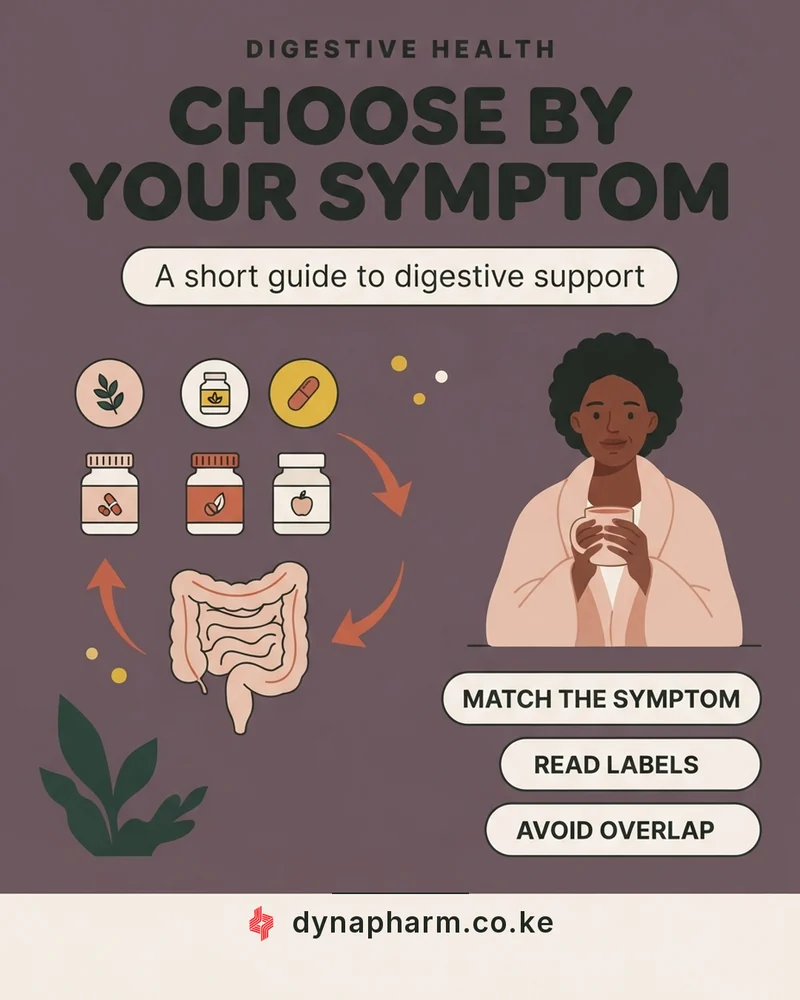
The shelf is crowded with teas, enzymes, probiotics and charcoal. Most work for a narrow situation, not for every kind of bloating.
Digestive comfort and bloating relief products
Evidence snapshot
Digestive enzymes may help when a meal is very high in fat or when the pancreas does not make enough enzymes, a medical condition that needs diagnosis.
Herbal carminatives such as fennel or peppermint have modest traditional use, but evidence varies by product and dose.
Activated charcoal is often marketed for gas, but it can reduce absorption of prescription medicines and is not a routine choice.
What to do with this
Read the ingredient list and check the dose of each active ingredient. Avoid stacking several products at once, because you will not know which one helped.
For the specific question "digestive comfort and bloating relief products", that means a short symptom and food note is more useful than a generic elimination plan. If a pattern appears, test it deliberately rather than cutting whole food groups for months without guidance.
Notice when symptoms occur rather than only what you ate. Meal size, timing, sleep and stress all change gut sensitivity, and a pattern seen over two weeks is more useful than one bad day.
Questions people ask
Are 'detox' teas useful for bloating?
They usually work by causing a laxative effect, not by removing toxins. Senna-style teas are not for daily use.
Can probiotics cause bloating?
Yes, some people notice gas in the first week. If it persists, stop and review the strain.
A common follow-up
Can probiotics cause bloating? Yes, some people notice gas in the first week. If it persists, stop and review the strain. That context matters when you see broad claims about digestive comfort and bloating relief products.
The short answer
Read the ingredient list and check the dose of each active ingredient. Nothing here replaces medical care, and persistent symptoms deserve a proper assessment rather than another product.
Sources
Found this helpful? Share it or order on WhatsApp: