
The pH of Goat Milk Soap: What It Means for Your Skin
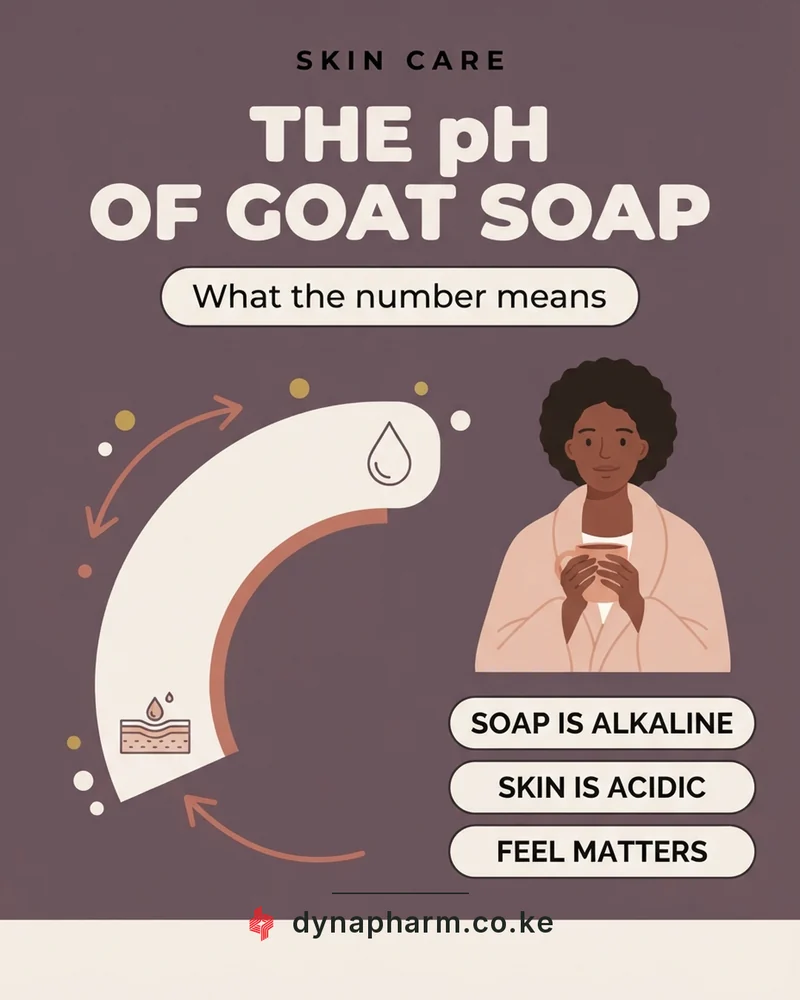
The milk may be gentle, but the finished bar is still soap. Understanding pH helps explain why it feels different from a facial cleanser.
Ph of goat milk soap
Evidence snapshot
Traditional soap made by saponifying oils and lye usually has a pH around 9 to 10. That is alkaline compared with skin's surface.
Skin's acid mantle helps limit microbial growth and supports barrier function. Alkaline cleansing can disrupt it temporarily.
Syndet bars and liquid facial cleansers are formulated at a lower pH and are often better tolerated by very dry or reactive skin.
What to do with this
You cannot reliably measure pH at home. If your skin feels tight after washing, switch to a pH-neutral cleanser rather than adding more moisturiser.
For the specific question "ph of goat milk soap", that means skin is an organ, not a surface to scrub. Irritation often comes from doing too much: several active products, frequent washing and fragrances layered on top of one another.
Introduce one new product at a time and give it several weeks. Skin barrier recovery is slow, and changing three things at once makes it impossible to know what caused an improvement or a reaction.
Questions people ask
Does goat milk lower the pH?
Not enough to make the bar acidic. It mainly changes how the soap feels.
Is alkaline soap harmful?
Not for most people, but it can aggravate dry or compromised skin.
A common follow-up
Is alkaline soap harmful? Not for most people, but it can aggravate dry or compromised skin. That context matters when you see broad claims about ph of goat milk soap.
The short answer
You cannot reliably measure pH at home. Nothing here replaces medical care, and persistent symptoms deserve a proper assessment rather than another product.
Sources
Found this helpful? Share it or order on WhatsApp:
