
What to Eat Instead of Ugali
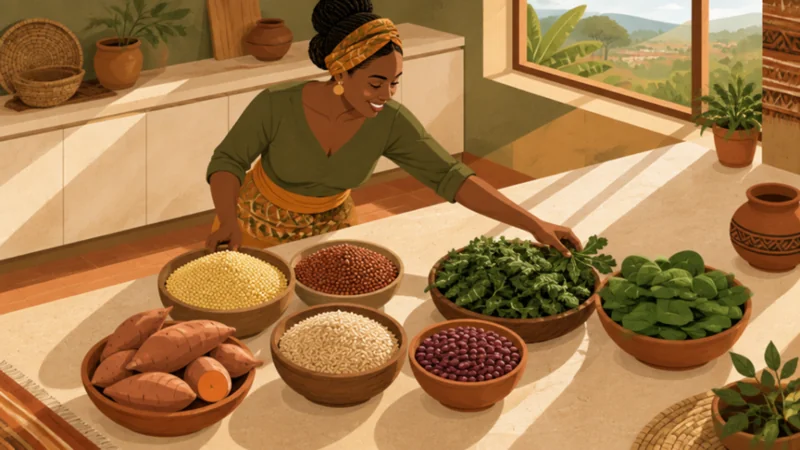
What to Eat Instead of Ugali
What to eat instead of ugali is a fair question, but the wrong first question. The better question is what to eat with ugali, and how much — because ugali is not going anywhere, and it should not. Ugali is a Kenyan staple with enormous cultural and economic weight. It is the cheapest filling calorie available to millions of households, it is what a plate means in most of the country, and telling Kenyans to abandon it is both bad advice and bad content. What actually works is smaller portions, better pairing, and swaps that reduce the total starch load of the meal without removing the food people know.
So this article is about the whole plate: what to give ugali alongside, which carbohydrates can share the role when variety helps, and how to keep a Kenyan meal recognisable while lowering its blood-sugar impact. The search for what to eat instead of ugali is really a search for a better-balanced plate.
Key points
- Ugali is a staple, not a mistake. The goal is portion and pairing, never elimination.
- A smaller ugali portion plus more vegetables and protein changes the meal's blood-sugar behaviour more than swapping the ugali itself.
- Where variety helps, complex carbohydrates — nduma, sweet potato, green banana, pumpkin — can take part of the plate.
- Sukuma wiki, managu and other greens add volume and fibre for very little carbohydrate.
- No swap replaces ugali's cultural and economic role; the aim is a better-balanced plate that still feels Kenyan.
Why "stop eating ugali" is the wrong advice
Ugali is maize meal cooked with water to a firm consistency. It is starch — carbohydrate — and that is exactly why it needs managing rather than banning. But consider what "stop eating ugali" actually means in a Kenyan household. It means replacing the cheapest, most reliable, most filling food on the table with something that costs more and satisfies less. For families managing both a health condition and a budget, that instruction falls apart at the shop.
There is also a cultural point the global content misses. Ugali is not a side dish; it is the anchor of the meal. Meals are built around it. Any nutrition advice that assumes it can simply be deleted misunderstands the plate it is advising on.
The publishable, useful frame: keep ugali, shrink it, and rebuild the rest of the plate around it. That is realistic, affordable, and far more likely to be followed than a prohibition.
What to eat instead of ugali: the real lever
In most Kenyan meals, the ugali is not alone. It comes with sukuma wiki, or managu, or spinach, and often with meat, fish or beans. How that whole plate is composed determines the blood-sugar effect far more than any single swap.
Here is how to think about the proportions:
| Plate role | What it does | Kenyan examples | |---|---|---| | Starch | Fast energy, raises glucose | Ugali, rice, chapati, potatoes | | Protein | Slows digestion, sustains satiety | Beef, chicken, fish, eggs, beans, ndengu | | Vegetables | Adds volume and fibre, low carbohydrate | Sukuma wiki, managu, spinach, cabbage, terere | | Fat | Slows digestion, adds satiety | Cooking oil, avocado, groundnut |
The classic Kenyan plate is heavy on starch and light on the other three. Rebalancing it — a smaller ugali, a bigger heap of greens, a solid portion of protein — is the single most effective change, and it does not require giving anything up. That rebalancing is the most useful reply to what to eat instead of ugali.
Rule of thumb: if you can still see a lot of ugali and only a little sukuma, the plate is out of balance. Move the proportions.
A story about a plate in Nakuru
Grace, 47, cooks for a family of six in Nakuru. When her husband was told to manage his blood sugar, her first instinct was to stop cooking ugali — and the result was misery. Meals felt incomplete, her husband snacked afterwards, and she was spending more on alternatives that nobody enjoyed. Then a clinic nutritionist suggested something less drastic: keep the ugali, but make the piece smaller for her husband, and double the sukuma wiki and the protein. She also started adding a boiled egg or extra ndengu. The meal still looked and tasted like dinner. Her husband stopped snacking after meals, because the protein and greens kept him full. Nothing was banned. The plate was simply rearranged.
The cost reality behind the swap
Any advice about replacing ugali has to survive the market, so let us face the money. A 2 kg packet of unga is one of the cheapest sources of filling calories in Kenya. Alternatives that global content casually recommends — quinoa, cauliflower rice, imported brown rice — cost many times more per serving and are often not stocked outside the largest supermarkets.
The affordable swaps are the ones already in Kenyan markets: sukuma wiki, terere, managu, cabbage, nduma, ngwaci (sweet potato), malenge (pumpkin), eggs, ndengu, beans, omena and dagaa. These are the real options for most households, and they happen to be the ones this article recommends. The best plate change is the one a family can actually afford on a Tuesday, not the one that requires a specialty shop.
This is also why "just stop eating ugali" fails so badly. It asks people to replace the cheapest calorie on the table with something pricier, and it ignores that ugali is what makes a small amount of stew go far. A smarter plate keeps the cheap staple, shrinks it, and stretches the meal with cheap vegetables and a little protein — which is affordable and still better balanced. Read that way, what to eat instead of ugali is not a new food but a better-proportioned old one.
What a working day's eating actually looks like
To make the swaps concrete, here is how a Nairobi working day often unfolds, and where ugali and its substitutes fit.
- 7 a.m. — tea and bread, or uji. Often little protein.
- 10 a.m. — the office tea, sweetened, sometimes with a mandazi.
- 1 p.m. — the main meal: ugali or rice, a little stew, a little sukuma.
- 4 p.m. — the four o'clock tea, sweetened, with a snack.
- 8 p.m. — dinner: ugali again, with greens and maybe meat.
The ugali is not the weak point in that day. The weak points are the sweetened teas, the snacks, and the near-absence of protein until dinner. Shrinking the ugali a little helps. Doubling the greens and lifting the protein helps more. That is the realistic order of operations.
Complex carbohydrates: what can take part of the plate
Where variety helps — for texture, for cost, for fibre — some Kenyan complex carbohydrates can share the starch role. These are still carbohydrate, so they reduce rather than remove the starch load.
| Swap option | Kenyan name | Note | |---|---|---| | Arrowroot | Nduma | Starchy tuber; treat like ugali, smaller portion | | Sweet potato | Ngwaci | More fibre than white potato; still carbohydrate | | Green banana | Matoke / ndizi | Firmer starch, lower sugar when green | | Pumpkin | Malenge | Lower starch by weight than ugali | | Butternut | — | Similar to pumpkin | | Cassava | Muhogo | Very starchy; use small portions |
None of these is a free food. They are carbohydrates, and the portion still matters. But paired with protein and vegetables, they can bring more fibre and micronutrients than a refined ugali alone, and they add variety to a monotonous plate.
Vegetables: the part that should grow
The most under-used lever in Kenyan cooking is vegetable volume. Sukuma wiki is cheap, widely available, and adds bulk, fibre and micronutrients for very little carbohydrate.
Ways to raise the vegetable share without changing what a meal is:
- Double the sukuma portion and cook it with less oil.
- Mix greens — sukuma wiki, terere (amaranth), managu, spinach.
- Add cabbage or carrots to the same pot for variety.
- Serve a side salad or kachumbari with the meal.
- Cook greens with a little protein — eggs, omena, or small pieces of meat — so one dish carries two roles.
Vegetables do not swap out the ugali. They make the plate bigger and the ugali portion proportionally smaller, which is the outcome that matters.
Protein: the anchor that keeps you full
Protein and vegetables are more satiating per calorie than refined starch. That is a well-established point and it is the reason a plate with adequate protein stops the after-meal snacking that so often adds carbohydrate back.
Kenyan protein sources are plentiful and affordable:
- Eggs — cheap, versatile, easy to add to any meal.
- Beans and ndengu (green grams) — plant protein with fibre.
- Omena and dagaa — dried fish, protein plus calcium from the bones.
- Beef, goat, chicken — in modest portions.
- Fish — tilapia from the lake regions.
- Dairy — milk, fermented milk, plain yoghurt, where tolerated.
A plate with a solid protein portion, a large heap of greens, and a smaller piece of ugali will sustain you longer than the same total volume of starch alone. That is the mechanism. It is not a trick.
How to rebuild a Kenyan plate
- Keep ugali. Do not remove it. Respect the plate.
- Shrink the portion. A smaller piece than usual is the single biggest change.
- Double the greens. Sukuma wiki, managu, terere, spinach.
- Make protein visible. An egg, a piece of fish, beans, or ndengu.
- Cook with less oil and salt, more vegetables. Keep the flavour, change the balance.
- Add a complex carb for variety sometimes. Nduma, ngwaci, malenge — small portions.
- Eat at set meals. Fewer, fuller meals beat constant snacking.
- If you manage diabetes, tell your clinician what your plate looks like. Portion advice works best when it fits your readings and medication.
Want the numbers behind this? How ugali affects blood sugar is worth understanding before you change the plate — see our honest breakdown.
What we are not saying
Let us be explicit, because this topic invites overreach.
- We are not saying stop eating ugali.
- We are not saying complex carbohydrates are "free" — they are carbohydrate.
- We are not promising that any plate change will lower your readings, because that depends on your whole diet, activity and medication.
- We are not giving a universal portion size, because it depends on the person.
What we are saying is modest and, we think, more useful than a slogan: a Kenyan plate with a smaller ugali, more vegetables and real protein is a better-balanced plate, and it is achievable tonight without changing who you are. That, in one sentence, is what to eat instead of ugali.
Frequently asked questions
Should I stop eating ugali?
No. Ugali is a Kenyan staple and is affordable and filling. The useful change is a smaller portion with more vegetables and protein, not removal.
What can I eat instead of ugali for diabetes?
You do not need to replace ugali; you need a smaller portion alongside more vegetables and protein. Where variety helps, complex carbohydrates like nduma, sweet potato and green banana can take part of the plate in modest amounts.
Is nduma better than ugali?
Nduma is a starchy tuber and is still carbohydrate. It brings more fibre than refined ugali, but the portion still matters. It is an alternative, not a free food.
Is brown ugali better than white?
Ugali made from less-refined maize meal retains more fibre and is generally a slightly better choice than highly refined white maize meal. The portion still matters more than the colour.
What vegetables go with ugali?
Sukuma wiki, managu, terere, spinach, cabbage and kachumbari are all common, cheap and low in carbohydrate. Increasing them is the easiest way to improve the plate.
How much ugali is a reasonable portion?
Portion depends on your body size, activity and health condition. A smaller piece than your usual serving, balanced with more vegetables and protein, is the practical starting point, and your clinician can tailor it.
Also read
- Ugali and Blood Sugar: The Honest Numbers
- Building a Kenyan Plate Around Vegetables
- Nduma, Sweet Potato and Green Banana: The Kenyan Complex Carbs
- Animal Protein as the Anchor of a Low-Carb Kenyan Plate
This article is general information, not medical advice. It is not a substitute for diagnosis or treatment by a qualified health professional. If you have a diagnosed condition or take prescription medication, speak to your clinician before changing your diet, fasting routine or medication.
Found this helpful? Share it or order on WhatsApp:
