
What to Eat at 11 a.m. When You Skip Breakfast
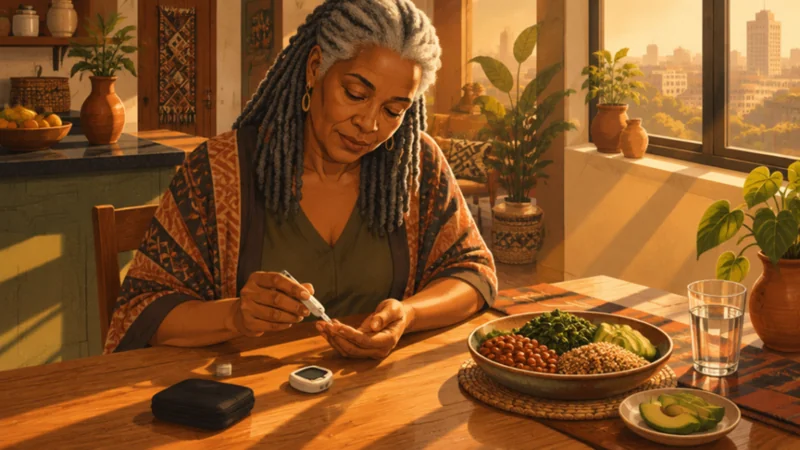
What to Eat at 11 a.m. When You Skip Breakfast
Your first meal of the day at 11 a.m. should be protein-led and vegetable-heavy, with little or no starch — for example, two or three eggs, a large serving of sukuma wiki cooked with onion and tomato, and unsweetened black tea. That combination provides enough protein and volume to hold you until the evening meal without driving a large glucose spike.
This is the practical answer to a question that arises as soon as someone starts eating later in the day. Moving your first meal of the day changes what that meal needs to do. It now has to carry you further, and that changes its composition.
This article covers how to build that meal, why protein matters more here than at any other meal, what to drink, and the safety cautions that apply to anyone considering a later first meal.
Key points
- A first meal at 11 a.m. works best when it is protein-led with substantial vegetables and little or no starch.
- Protein and fibre are what carry you to the evening meal; a starch-heavy first meal tends to produce hunger sooner.
- Drinks stay unsweetened: water, black tea, black coffee, green tea, hibiscus.
- This pattern is not appropriate for everyone — pregnancy, breastfeeding, type 1 diabetes, insulin or sulfonylurea use, eating-disorder history, adolescents and underweight individuals should not start it without clinical advice.
- Never change medication timing because of a change in meal timing without talking to your prescriber.
Why the first meal changes when you eat later
There is a normal early-morning hormonal rise that prompts the liver to release stored glucose. That is why many people are genuinely not hungry in the morning, and why children often refuse breakfast. It is not stubbornness.
If you eat your first meal at 11 a.m., several things are different from a 7 a.m. breakfast:
- You are genuinely hungry by then. The early-morning glucose release has faded.
- The meal has to last longer. The next meal is around 6 or 7 p.m., so it needs to hold six or seven hours.
- The composition matters more. A meal that produces a sharp glucose peak followed by a drop produces hunger well before evening.
That last point is the whole reason this article exists. The wrong first meal of the day leaves you hungry at 2 p.m., and hunger is what ends this pattern for most people.
The structure of a good first meal
Three components, in this order.
1. Protein — a substantial serving. Two or three eggs, a piece of fish, beef, chicken, or a serving of ndengu or beans if you prefer plant protein. Protein is what holds hunger off. Aim for a real portion, not a token one.
2. Vegetables — a large serving. Sukuma wiki, terere, managu, cabbage, spinach. Two cups of cooked greens is a reasonable serving. Vegetables add volume and fibre, and they fill the plate.
3. Fat — some, from cooking. A little oil for cooking, or the fat naturally in the protein. Fat slows gastric emptying and helps the meal last.
4. Starch — little or none at this meal. This is the biggest single change from a traditional Kenyan breakfast, which is usually starch-led: bread, uji, mandazi, chapati, or cereals. If you want a starch, make it small and choose a whole one — a piece of nduma or sweet potato.
Read the plate model in Building a Kenyan Plate Around Vegetables.
Meals that work, and meals that do not
| Works well at 11 a.m. | Why | Usually problematic | Why | |---|---|---|---| | 2–3 eggs + large sukuma | Protein, fibre, almost no starch | White bread + margarine + sugared tea | Starch plus sugar, low protein | | Grilled fish + terere | Protein, fibre, some fat | Uji with sugar | Refined carbohydrate, sugar | | Beef stew + cabbage + small nduma | Protein, volume, small whole starch | Cereal with milk and sugar | Refined carbohydrate, sugar | | Omelette with spinach and onion | Protein plus vegetables, one pan | Chapati + tea | Refined starch, little protein | | Ndengu stew + managu | Protein plus fibre | Mandazi + soda | Fried starch plus sugar |
Notice the pattern. The good options lead with protein and vegetables. The problematic ones lead with refined starch and sugar — which is exactly what a traditional Kenyan breakfast does.
A worked day
Here is how an 11 a.m. first meal and a 6:30 p.m. second meal look across a day.
| Time | What happens | |---|---| | 6:30–9 a.m. | Water, black tea or black coffee. No food. | | 11 a.m. | First meal: eggs, large serving of greens, a little oil. Black tea. | | 11 a.m.–6:30 p.m. | Water, plain tea or coffee if wanted. No snacks. | | 6:30 p.m. | Second meal: protein, large serving of vegetables, small portion of a whole starch if desired. | | 7 p.m. | 15-minute walk. | | Rest of evening | Water or herbal tea. Nothing sweet. |
This is a two-meal pattern. It is one option among several, not a requirement, and it suits some people far better than others.
Contraindications — read this before starting
A later first meal and two-meal patterns are not suitable for everyone. Do not start this without clinical advice if any of the following applies to you:
- You are pregnant or breastfeeding. Energy and nutrient needs are higher, and long gaps between meals are not appropriate.
- You have type 1 diabetes. Fasting with type 1 diabetes requires close clinical management and is not something to begin independently.
- You take insulin or a sulfonylurea (for example glibenclamide, gliclazide or glimepiride). These medications lower blood glucose, and combining them with long gaps between meals can cause hypoglycaemia, which is a medical emergency. Your doses and timing may need review — by your prescriber, not by you.
- You have a history of an eating disorder. Restricting eating windows can be harmful. This is a clinical matter.
- You are an adolescent. Growth and development require regular nutrition.
- You are underweight. Reducing meal frequency is not appropriate.
- You have another medical condition or take medication that affects blood sugar or appetite. Ask your clinician first.
If you are on any prescribed medication, the rule is simple: talk to your prescriber before changing when you eat, and never stop or change a dose yourself.
What to drink between meals
Hydration between meals is part of the pattern. Keep it unsweetened:
- Water — the default
- Black tea, unsweetened
- Black coffee, unsweetened
- Green tea, unsweetened
- Hibiscus, unsweetened
- Chamomile and other herbal teas
- Water with a small pinch of salt, if you are sweating heavily or exercising
No sugar, no honey, no sweetener, no milk if you are keeping the window strict, and no fruit juice. These are the drinks that quietly turn a fasting window into a fed one.
For the full list, see What to Drink When You Cut Sugar.
Common problems
"I am hungry by 2 p.m." Your first meal was too small, or too starchy. Increase the protein and the vegetables.
"I feel weak in the morning before 11." If this is new and you are not on glucose-lowering medication, it usually passes within a week or two. If you are on such medication, or if it is severe, stop and speak to your clinician.
"I cannot concentrate." Usually under-hydration or under-sleep. Check both before abandoning the pattern.
"I eat too much at 11 because I am starving." That is the pattern correcting itself. The 11 a.m. meal will get smaller as your body adjusts.
"My family thinks I am starving myself." Explain that this is about meal timing, not restriction. You are eating the same food, later.
One reader's first week
A 43-year-old accountant in Nairobi had been eating breakfast at 6:45 a.m. out of habit — bread, margarine and sweet tea — and then feeling hungry again by 10 a.m. She was not trying to fast; she simply wanted to stop the morning hunger.
With her clinician's agreement (she was not on glucose-lowering medication), she moved her first meal to 11 a.m. Her first attempt was bread and tea at 11, which left her hungry by 1:30.
Her second attempt was three eggs, a large serving of sukuma cooked with onion and tomato, and black tea. She ate at 11 and did not think about food again until she left the office.
The food had not changed much. The order and the composition had. Protein and vegetables did what bread and tea could not.
Frequently asked questions: first meal of the day
What should my first meal of the day be if I skip breakfast?
Your first meal of the day should be protein-led and vegetable-heavy, with little or no starch. Two or three eggs with a large serving of sukuma wiki, or fish with terere, or beef stew with cabbage. Unsweetened black tea or water to drink.
Is it healthy to skip breakfast?
Skipping breakfast is not inherently harmful for most healthy adults — the "breakfast is the most important meal" slogan is not well supported as a universal rule. That said, it is not appropriate for everyone, and anyone on glucose-lowering medication, pregnant or with other conditions should take clinical advice first.
What if I feel dizzy before 11 a.m.?
Stop and eat, and speak to a clinician — especially if you take medication that lowers blood glucose. Dizziness can indicate hypoglycaemia, which needs to be taken seriously.
Can I drink coffee during the fasting window?
Plain black coffee, unsweetened, is generally acceptable during a fasting window. Adding sugar, milk or cream makes it a fed-state drink.
How long should I wait before walking after this meal?
About 15 to 30 minutes, then a 15-minute walk is a good pattern. See Walking After Meals.
Does this work for weight loss?
Two meals a day reduces the number of eating occasions, which can reduce total intake for some people. It is not a guaranteed weight-loss method, and it is not appropriate for everyone. The composition of the meals matters as much as the timing.
The bottom line
A first meal of the day at 11 a.m. works best when it leads with protein and vegetables and goes light on starch. Eggs and sukuma will hold you far longer than bread and tea.
Check the contraindications first. If you take medication that lowers blood glucose, talk to your prescriber before changing when you eat.
Also read
- Why Snacking Undoes Intermittent Fasting
- Two Meals a Day: How to Make It Work
- A 7-Day Kenyan Meal Plan Without Ugali
This article is general information, not medical advice. It is not a substitute for diagnosis or treatment by a qualified health professional. If you have a diagnosed condition or take prescription medication, speak to your clinician before changing your diet, fasting routine or medication.
Found this helpful? Share it or order on WhatsApp: